Mental Well-being is an Educational Priority, Not an Extra
posted on Aug 19, 2026
Discover why mental well-being is essential for meaningful learning and how Queen’s Valley School supports girls’ academic and emotional growth.
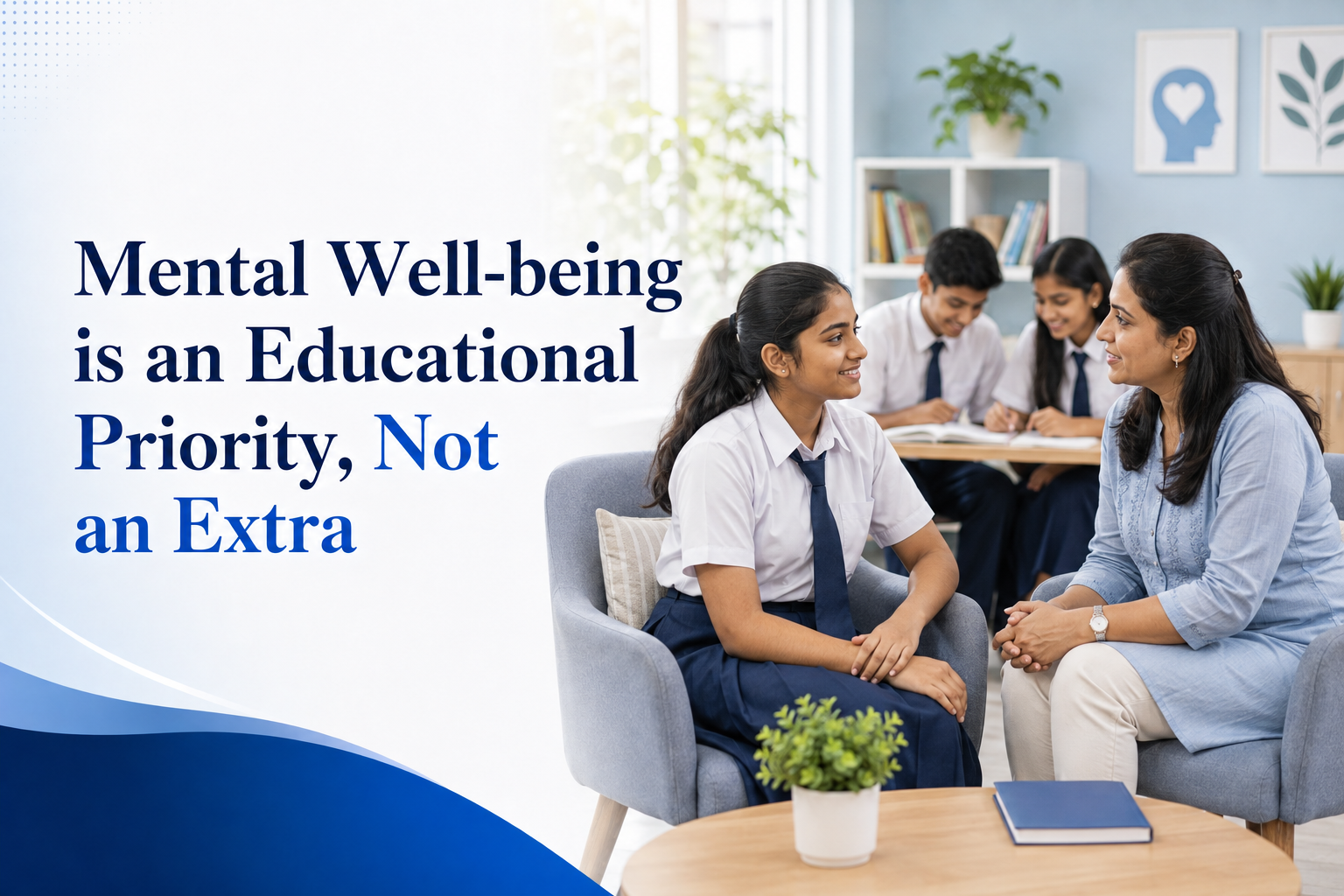
Every child has a certain degree of intellectual prowess, but many fail to materialise it. Do you know why? In most of the cases, it is because of mental pressure. Think of a highly intelligent student who fails to pay attention in classroom discussions due to anxious thoughts running in his head, or a student who starts withdrawing from group learning projects due to constant mental overwhelm.
In all these cases, problems aren’t arising because a child cannot learn; they arise because their mental state prevents them from participating normally in the learning process. This is why we at Queen’s Valley School, a well-known CBSE girls school in Dwarka, Delhi, always treat our students’ mental well-being as an educational priority, not an extra.
If you’re still unsure whether mental well-being deserves to be viewed as an integral part of the educational journey, then the following points will bring clarity. Read on.
-
A Child Cannot Learn When Mental Well-being is Constantly Compromised
Think about what happens when your mind is occupied by stress and worry. It usually makes it harder to pay attention to a conversation, let alone understand a difficult lesson. Several children experience this far more frequently than we realise.
For instance, a child will hesitate to raise their hands and answer questions if they’re feeling anxious about failure. Similarly, another child may pay little attention to what is being taught in the classroom if they’re not feeling mentally safe. Hence, if you want your children to remain fully present in their academic journey, you must prioritise their mental well-being.
It’s a pre-requisite to meaningful learning. Hence, we at Queen’s Valley School, a highly trusted girls-only school in Dwarka, Delhi, have created a designated counselling unit to support our students’ mental well-being. Besides restoring students’ mental harmony, this unit has also contributed to improving their overall academic performance and participation.
-
The Scale of Adolescent Mental-Health Challenges Makes it an Educational Issue
Mental well-being could have been treated as an extra if the problems were limited to a handful of students. However, a WHO report points to something far more concerning. According to their report, almost one in seven students globally experiences a mental health condition. The students referred to here belong to the 10-19 age group.
The same report also highlighted how anxiety and depressive disorders can affect students’ school attendance and performance.
At Queen’s Valley School, we firmly believe that irrespective of whether a child’s mental well-being is affected due to peer pressure, their living conditions, extreme stress, or any other reason, it should be addressed promptly. Otherwise, the child’s emotional state will begin interfering with their regular school life, affecting their learning journey, academic participation, and performance.
-
Schools Are Uniquely Positioned for Early Support
While parents may notice behavioural changes at home, teachers get to see a different side of students in schools. At Queen’s Valley School, a CBSE girls school in Dwarka, Delhi, our teachers are trained enough to notice when a student who usually participates becomes unusually quiet. They also observe if a student suddenly stops interacting with classmates or begins avoiding activities they once enjoyed. This early identification can help teachers put more effort into creating a safe, inclusive classroom where students experience psychological safety.
Once this sense of safety is established, children begin to focus better in their academics. It also leads to improved classroom participation and overall academic performance.
-
Mental Well-being is Also Connected to the Quality of the School Environment
Surprisingly, some students experience mental distress due to the school environment, which makes their mental well-being an even more important part of education.
If a student repeatedly faces exclusion in the school environment or doesn’t feel safe to raise their voice during classroom discussions, group projects, debates, etc., then such instances can affect their mental well-being, too.
In such cases, a student’s mental well-being and education become intertwined. You cannot improve one while ignoring the other. Hence, it is very important that schools prioritise creating an environment that supports children’s healthy mental well-being.
It’s one of the key reasons why we at Queen’s Valley School have roped in professional counsellors for our student counselling unit. Even our teachers pay special attention to ensure they create a stress-free learning environment for all.
What Does It Mean for the Future of Education?
Modern schools shouldn’t just prepare students for exams, but for life. Hence, equal efforts should be made to nurture their mental toughness so they can handle life’s biggest challenges with ease.
After all, a student with a healthy mental state is more likely to perform better in academics and also in other areas of their life. They’re better equipped to focus clearly during classroom discussions, participate more in group projects, take initiatives to lead a school event, and even strive to achieve their full intellectual potential.
Hence, if, as a parent, you wish for your girl child to excel not just in academics but every area of life, prioritise a school like Queen’s Valley School that takes due care of your child’s mental well-being.
Frequently Asked Questions (FAQs)
-
Does prioritising students’ mental well-being compromise their academic performance?
No, absolutely not. In fact, if students’ mental well-being is prioritised, it helps strengthen their academic capabilities and aids in their holistic growth.
-
How can parents support their child’s mental well-being?
Parents can support their child’s mental well-being by creating a safe home environment and listening more without judgment.
-
What role should schools play in students’ mental health?
Schools should focus more on creating a safe, inclusive, stress-free environment for all students. Efforts should be made to boost psychological safety, so that students can use all their energy in learning rather than identifying threats.
Conclusion
A child’s emotional and mental state isn’t separate from their being. Whether they enter a classroom to attend a lesson or visit a laboratory to conduct a live experiment, they’ll always carry their emotions and thoughts with them.
If any of these are disrupted, it’ll naturally affect the child’s learning experiences. As such, the only practical way to ensure every student remains fully present, engaged, and invested in their regular educational experiences is by facilitating healthier mental well-being.
At Queen’s Valley School, we believe that nurturing mental well-being is the bare minimum when it comes to helping children discover their potential and grow into confident, resilient individuals. So, if you’re looking for a school where your daughter’s emotional well-being is given equal attention as her academic growth, explore what Queen’s Valley School has to offer.
Enrol your daughter in Queen’s Valley School, the most highly trusted CBSE girls school in Dwarka, Delhi, and gift her an environment where she can learn, grow, and thrive with confidence.